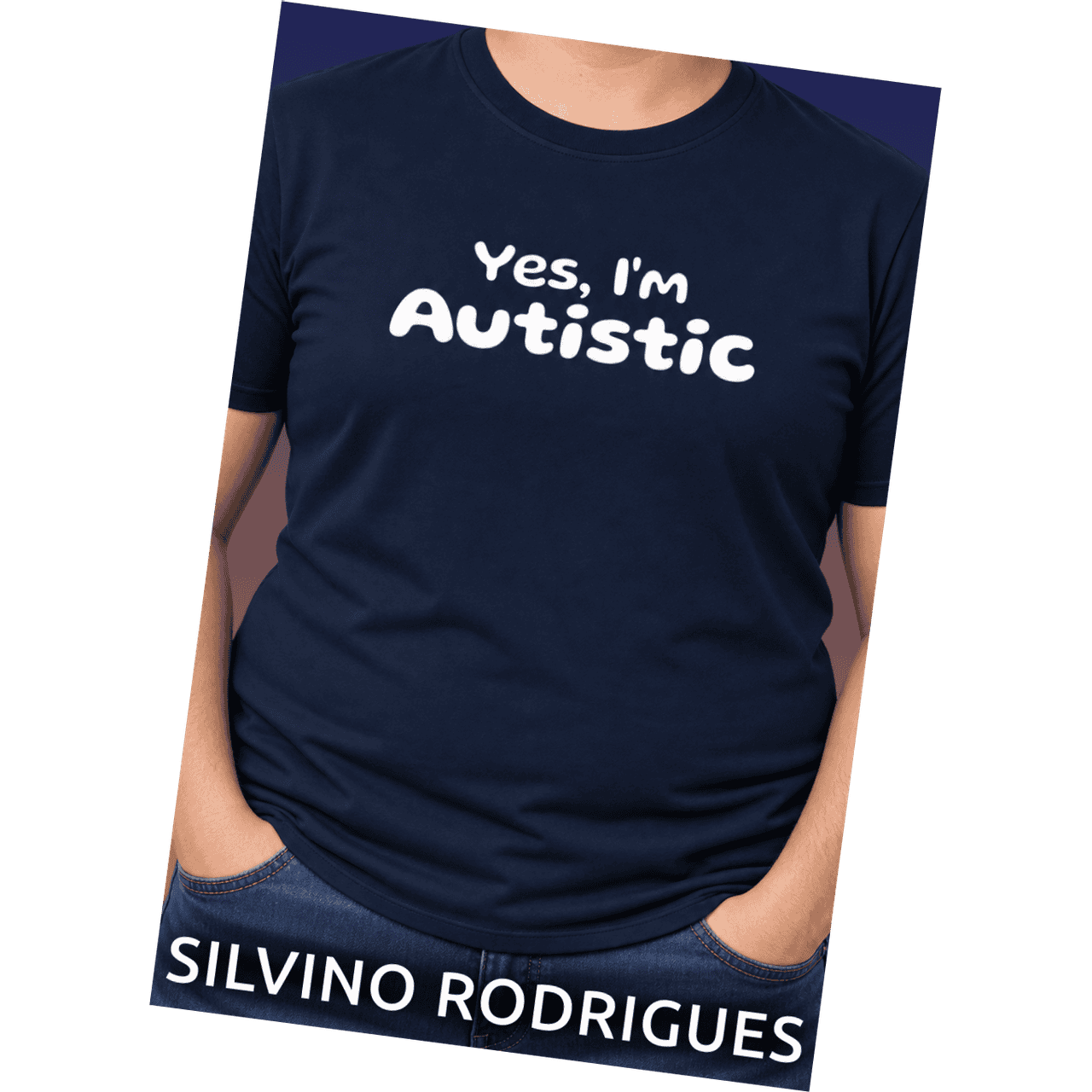
About the Book
I spent half a century failing to understand the people around me, and being failed by them in return. Only my half of it ever got a name - and the name was wrong.
Five essays, written over fifteen days in August 2026, that turned out to be one argument.
He did not know he was autistic until midlife. What he knew was the evidence: the jobs that ended, the rooms he could describe in detail but never enter, the friendships that turned out to be with the performance rather than with him. And one conclusion, drawn early and never questioned - that the fault was his.
Yes, I'm Autistic is not a recovery memoir and it is not a guide. It is an argument about what it costs to be missed, and it is sourced throughout, because its author does not expect to be believed. Where a claim rests on evidence, the evidence is named. Where it rests on one life, the book says so. Where he went looking for evidence and could not find any, that is recorded too.
The five essays
- Unmasked at Midlife - why a generation of autistic adults reached their forties, fifties and sixties without ever being seen, and why the answer, when it arrives, so often lands as grief rather than relief.
- Everyone Masks - conceding that impression management is universal, then asking what makes the autistic version cost more to run, buy less belonging, and fail more often than it works.
- The Loneliness Snowball - how isolation feeds itself, and why but you like being on your own is a disability being recorded as a preference.
- Rights You Have to Ask For - the Universal Declaration of Human Rights, handed over a counter you have to walk up to and ask at, when asking is the disability.
- Take Me As I Am - an open letter to everybody who ever decided what I was.
Who it is for
Three kinds of reader. The person who suspects. The person who already knows, and is somewhere in the long unpicking that follows. And the person who is not autistic, and who loves, lives with, works with, teaches or employs somebody who is.
That third reader is why this exists as a book. There is one finding inside with measured evidence behind it, and it is this: the only intervention that reliably works does not require the autistic person to do anything at all. It requires the people around them to know something.
And yes, they are free
Every one of these essays is on Silvino's website, in full, at no cost. Read them there if you would rather. The book exists because in this order they build into something the archive does not show you - and because you cannot gift somebody a link and make them read it.
About the Author

Silvino Rodrigues brings a rare combination of lived experience and formal expertise to the neurodivergence conversation. With over thirty years of corporate technology and tertiary studies spanning electronics engineering, software development, financial management, an MBA, and postgraduate work in adult education and psychology, Silvino writes with both analytical rigour and hard-earned personal insight.
A late-life discovery of autism and ADHD sparked a new direction: understanding why so many neurodivergent adults - and those who live and work alongside them - struggle to bridge a gap neither side can fully see. These books provide partners, colleagues, and employers seeking genuine understanding with clear explanations of how variant minds work.
Silvino now dedicates time to neurodivergent research, writing, and advocacy and is available for corporate and public speaking engagements on neurodivergence in relationships, workplaces, and everyday life.